
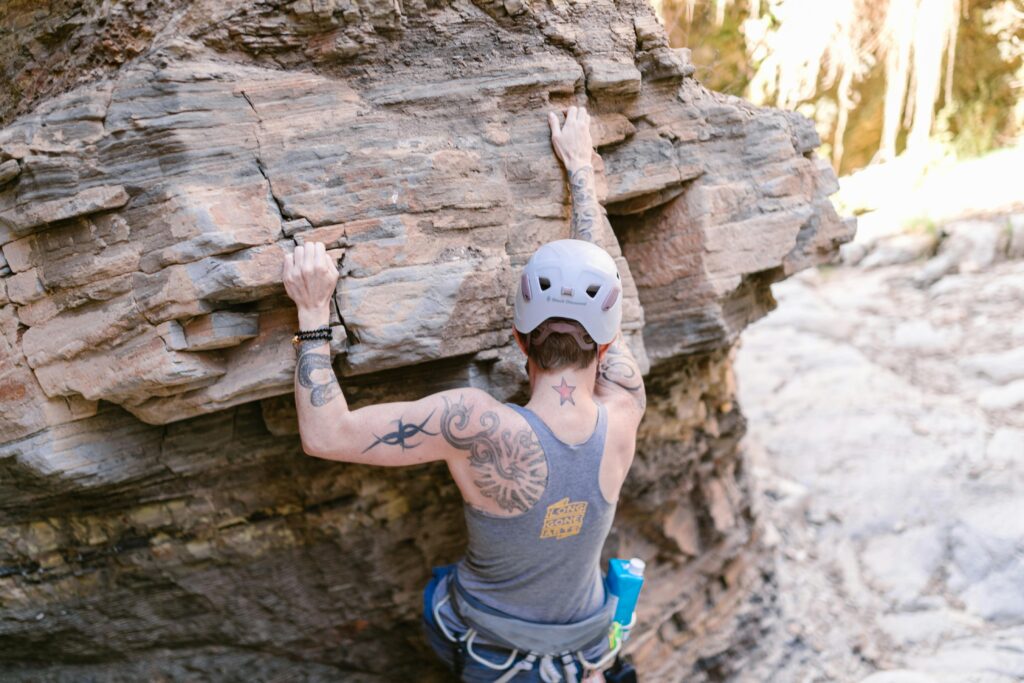
If you climb, you know it’s not just “upper-body strength.” It’s fingertip & core tension, quiet footwork, headspace on the wall—and skin that sometimes calls the shots. When something hurts, you don’t want generic “rest.” You want someone who speaks beta—gaston, mantle, send, flash—and can map what you feel to what you do. 💬
WHAT MAKES CLIMBING DIFFERENT 🧩
• Tiny tissues, big jobs — pulleys, flexor tendons, TFCC/DRUJ; strength-to-weight and control matter as much as power. 🖐️
• Unusual positions — gastons, underclings, mantles; drop-knees, heel/toe hooks, jams; smears, slopers, pinches, micro-edges. 🤸
• Static → explosive → micro-control — lock-offs into deadpoints/dynos, then millimetre body tension so you don’t barn-door. 🎯
• Problem-solving under fatigue — route reading, sequencing, pacing change load as much as strength does. 🧠
• Falls are part of practice — planned bouldering falls and the occasional FOOSH (fall on an outstretched hand). 🛬
CLIMBING-ASSOCIATED INJURY PATTERNS 🗺️
• Fingers & hand — pulley strains (A2/A4), collateral sprains, flexor overload; often with crimping on edges or hard lock-offs. 🖐️
• Wrist — TFCC/DRUJ irritation (underclings, wide pinches, jams), ECU tendinopathy/instability, dorsal wrist impingement; De Quervain’s Tenosynovitis with big pinches/slopers. ⌚
• Elbow — medial/lateral tendinopathy linked to sustained high-tension gripping and board sessions. 🏋️
• Shoulder — rotator cuff overload and labral irritability from lock-offs, gastons, underclings and dynamic catches. 💪
• Knee & ankle — MCL/LCL strains from deep drop-knees/heel hooks; ankle sprains with awkward landings. 🦵🦶
• Skin & soft tissue — fingertip splits, hand-back abrasion; often the limiter on volume. 🩹
WHY SEE A PHYSIO WHO UNDERSTANDS CLIMBING ✅
• We speak your moves, not just anatomy — symptoms are linked to holds, wall angles and styles (gaston vs undercling, slab vs 45°, board vs comp). 🧗
• We keep you climbing where it’s safe — adjust grip choice, wall angle and attempt volume instead of blanket rest. 🔧
• We plan by style, grip and angle — progress through edges → underclings → pinches/slopers; slab/vert → 30° → 45°+, with checkpoints that matter on a wall. 📈
• We watch real movement — mantle mechanics, gaston tension, deadpoints, foot swaps, centre-of-mass control and landing skills guide your plan. 🎥
• We set send-ready milestones — from steady easy mileage to confident flash attempts on your style—you’ll know when to push again. 🏁
WHAT YOUR APPOINTMENT FEELS LIKE 🤝
We start with your climbing: grades, styles, recent sessions, how many hard goes you take, and how it feels the next day. Then we look at how you move (on-wall or video): wrist/shoulder positions on mantles/underclings, grip choices on edges vs pinches, footwork and body tension. Together we lay out a clear plan—what to keep, what to pause for now, and how we’ll reintroduce styles and grips so you build momentum without yo-yoing between flare-ups. 🗺️
WHEN TO REACH OUT SOONER ⚠️
• Fall onto the hand with snuffbox tenderness or swelling.
• A sudden click/shift with loss of strength or confidence.
• Night pain, swelling or loss of motion that isn’t settling.
WHO WE HELP 🧗♀️
New climbers building tolerance, boulderers chasing the next grade, sport climbers managing pump and clipping comfort and anyone returning after time off and aiming to send again.
READY WHEN YOU ARE 📞
Questions about wrist, finger, elbow or shoulder niggles—or planning a safe path back to flashing your style?
Call: (03) 9213 7000
Booking: click here