
“I thought it was just a jammed finger—it didn’t even hurt.”
That’s one of the most common things we hear from patients with mallet finger—a deceptively minor-looking injury that, if left untreated, can result in a permanently bent fingertip.
At Crux Physio & Hand Therapy, we see the consequences of delayed treatment all too often. And while it may not stop you from doing your job at first, it can affect confidence, hand function, and social interaction in unexpected ways.
What Is Mallet Finger?
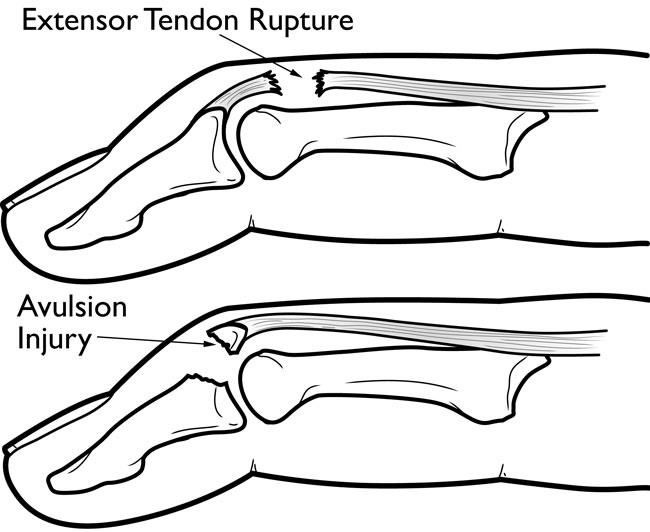
Mallet finger occurs when the tendon responsible for straightening the last joint of your finger—the terminal extensor tendon—gets torn or pulls off a small piece of bone where it attaches. This results in the fingertip drooping and an inability to actively extend it.
You can still push it straight with your other hand, but it won’t stay extended on its own. Without prompt and proper care, this deformity can become permanent.
Real-World Example: The Auctioneer Who Waited Too Long
One of our patients was a professional auctioneer who injured the tip of his little finger during a weekend move. He ignored it, thinking it would sort itself out. By the time he saw us, the window for conservative treatment had passed.
Now the fingertip is permanently bent. He told us,
“Every time I shake hands to close a deal, the tip of my little finger brushes against people awkwardly. It creeps them out—and now I feel self-conscious about it.”
He wasn’t in pain, but the social and professional discomfort was real. This is exactly why early treatment matters.
What Causes Mallet Finger?
- A direct blow to the fingertip (e.g. basketball, netball, cricket)
- Jamming your finger on furniture, doors, or while tucking in bedsheets
- Accidental strain during everyday activities—common in parents, tradies, climbers
You don’t need to be playing sport. We’ve seen it in everyone from students and gardeners to chefs and climbers.
Why Early Treatment Matters
People often dismiss mallet finger as a minor sprain. But here’s the problem:
You only get one chance to heal it properly—usually within the first few days.
Without proper splinting, the tendon or bone fragment doesn’t reattach. Instead, the joint settles into a permanently bent position, known as an extensor lag.
Once scar tissue sets in or the joint becomes misaligned, conservative treatment often fails—and surgery may be the only option.
What Happens If You Don’t Treat It Properly?
Leaving a mallet finger untreated—or trying to manage it with an ill-fitting splint—can lead to long-term problems, including:
- Permanent drooping of the fingertip
- Joint stiffness and weakness
- Visible deformity that affects hand function and confidence
- Swan Neck Deformity:
Over time, the imbalance between the finger tendons can cause the middle joint (PIP) to hyperextend, while the fingertip remains bent downward. This is known as a swan neck deformity. It affects both appearance and function, often requiring surgery if it progresses.
DIY Chemist Splints: Why They Often Fail
Many people try to manage this themselves using an over-the-counter splint. While it may seem like a quick fix, we’ve never seen a chemist splint work well for mallet finger.
Common issues:
- Poor fit = inconsistent finger position
- The splint slips off easily, especially at night or during work
- It doesn’t fully immobilise the joint, allowing micro-movements that compromise healing
- Prolonged use can cause skin maceration or pressure sores
Even one moment of the fingertip bending during healing can reset the entire process.
That’s why we use custom-fabricated thermoplastic splints, moulded to your finger to ensure precise fit, better comfort, and long-term compliance.
Tendinous vs. Bony Mallet: What’s the Difference?
Both injuries cause the fingertip to droop—but they involve different tissue and healing pathways:
| Feature | Tendinous Mallet | Bony Mallet |
|---|---|---|
| Cause | Tendon rupture | Avulsion fracture of tendon insertion |
| Common in | Older adults, lower-force trauma | Sports injuries, high-impact trauma |
| Healing time (splinting) | 6–8 weeks minimum | 4–6 weeks (if joint stable) |
| X-ray findings | Normal bony alignment | Small bone fragment; possible joint subluxation |
| Risk if untreated | Persistent extensor lag | Joint instability, arthritis if >⅓ joint surface |
| Surgical need | Rare | May be required if joint surface is unstable |
How Is It Treated?
✅ Custom Splinting
- The fingertip must be held fully straight (in extension) for 4–8 weeks
- No bending allowed—even once
- Splint must stay on 24/7, including during sleep and showers
- We teach safe cleaning techniques to prevent movement during hygiene
✅ Imaging
- An X-ray helps determine whether the mallet is bony or tendinous, and whether the joint alignment is preserved
✅ Education & Monitoring
- Patients are taught to monitor for swelling, skin issues, and how to change dressings without disrupting tendon healing
When Is Surgery Needed?
Surgery is rare, but we may refer you to a hand surgeon if:
- A large bony fragment involves more than one-third of the joint surface
- The joint has shifted (subluxation), making it unstable
- Conservative splinting fails after full compliance
- There’s persistent pain or functional limitation
Surgical options include pinning the joint or fixing the fragment to restore alignment and stability.
What to Expect During Recovery
| Phase | What Happens |
|---|---|
| Weeks 0–6/8 | Splint on 24/7, strict extension |
| Week 7–8+ | Guided splint weaning under supervision |
| Weeks 8–12 | Rehab for stiffness, swelling, and strength |
| Long-term | Most regain full function, but some have a mild lag |
Compliance is everything. A single slip-up can delay healing by weeks.
What You Should Do Now
- Don’t try to treat it yourself—DIY splints often do more harm than good
- Don’t wait it out—the earlier you splint it properly, the better your outcome
- Book in with a hand therapist—you don’t need a GP referral to start treatment
- If unsure, we can assess, splint, and advise you on the next steps
Final Thoughts from Crux Physio
Mallet finger may look minor, but it can have a lifelong impact if not managed properly.
Whether you’re an auctioneer, a climber, or a parent chasing toddlers, your hands are vital to how you work and live.
We’re here to help you catch it early, splint it right, and recover with confidence.
📞 Need Urgent Care?
Same-day appointments available at Croydon & Brunswick
✅ Custom splinting
✅ No GP referral needed
✅ Expert care from hand therapists