
Crux Physio & Hand Therapy – Carpal Tunnel Syndrome
Struggling with wrist pain, numbness or hand weakness? It might be Carpal Tunnel Syndrome (CTS)—but it’s probably not what you think.
Carpal Tunnel Syndrome is one of the most common nerve problems we see—especially in people who use their hands a lot: tradies, desk workers, new mums, and climbers. But while CTS is common, it’s also commonly misunderstood.
This article will walk you through:
- What CTS really is
- The latest treatment options (surgical and non-surgical)
- Whether splints actually work—and how long to wear them
- How climbers and manual workers get a “different” kind of CTS
- What happens if you ignore it
- Real clinical insights we see every day at Crux
👋 What is Carpal Tunnel Syndrome?
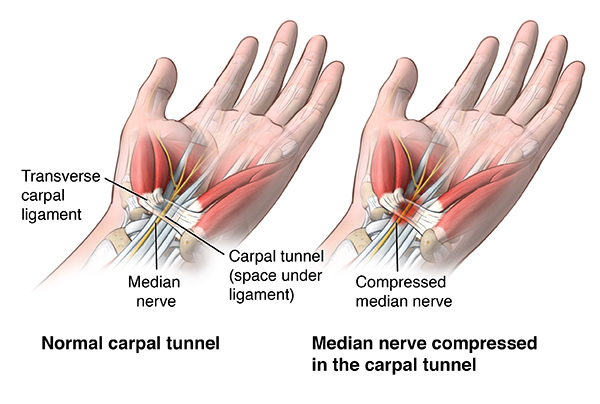
Carpal Tunnel Syndrome happens when the median nerve—which runs through your wrist—gets compressed inside the carpal tunnel, a narrow passageway surrounded by bone and ligaments.
Common Symptoms:
- Tingling or numbness in the thumb, index, middle, and part of the ring finger
- Waking at night with a “dead hand”
- Shaking the hand to relieve symptoms (the “flick sign”)
- Weak grip or thumb coordination (later stages)
🧠 Mild, Moderate or Severe? Understanding the Stages
Not all CTS is the same. Knowing what stage you’re in helps guide your options.
| Severity | Key Features |
|---|---|
| Mild | Intermittent numbness/tingling, no weakness, symptoms often worse at night or with hand use |
| Moderate | Persistent numbness, occasional clumsiness or weakness, sensory loss detectable |
| Severe | Constant numbness, muscle wasting (thenar atrophy), weakness in grip/pinch, nerve damage confirmed on tests |
Good news? Most mild to moderate cases do not require surgery if managed early.
⚠️ What Happens If You Ignore Carpal Tunnel Syndrome?
Many people try to “push through” CTS—but left untreated, the condition can progress and lead to permanent damage.
🔻 Here’s what can happen:
| Risk | What Happens |
|---|---|
| Worsening numbness | Symptoms become constant, including during the day |
| Muscle weakness & wasting | The thumb base (thenar muscles) shrinks, grip becomes weak |
| Permanent nerve damage | Long-term compression can cause irreversible changes |
| Persistent pain or altered sensation | Even with surgery, nerve sensitivity and cortical changes may linger |
| Reduced surgical success | Outcomes worsen the longer the nerve is compressed |
In short, early action preserves nerve health and function. The longer you wait, the more difficult recovery becomes—even with surgery.
🛠️ Can Carpal Tunnel Be Cured Without Surgery?
Yes—especially in mild to moderate cases, many people recover without surgery.
✅ Evidence-Based Non-Surgical Treatments:
| Treatment | What It Does | Evidence |
|---|---|---|
| Wrist Splinting (Neutral) | Keeps wrist in a low-pressure position during sleep | Effective in 4–6 weeks |
| Corticosteroid Injections | Reduces inflammation in the tunnel | Short-term relief (4–12 weeks) |
| Nerve & Tendon Glides | Helps nerve move freely within the tunnel | Supports mobility and healing |
| Activity Modification | Avoids aggravating postures (e.g. wrist flexion/extension) | Crucial for long-term control |
| Hydrodissection | Injecting fluid under ultrasound to free the nerve | Promising for persistent cases |
| PRP/Biologic Injections | Supports healing in chronic CTS | Emerging (still under research) |
🖐️ Custom vs Off-the-Shelf Splints: What’s Better?
Both can work—but custom splints have a few key advantages:
- Better comfort and fit = better compliance
- Maintains neutral wrist angle more precisely
- Reduces pressure on the nerve more consistently
Duration:
Wear every night for 4–6 weeks, ideally up to 3 months if symptoms improve. If no change after 6 weeks, time to reassess.
🧗♂️ Climbers and Manual Workers: A Different Kind of CTS
Here’s where it gets interesting: not all median nerve compression is true CTS.
🧬 Hypertrophied Lumbrical Muscles = Hidden Culprit
In climbers, mechanics, and heavy lifters, the lumbrical muscles in the palm can get so strong or tight that they actually bulge into the carpal tunnel during gripping.
“One climber we treated had numbness only when training hard on overhangs. His nerve studies were normal at rest, but an ultrasound showed his lumbricals entering the tunnel under load.”
This is called dynamic CTS—and it’s often missed because:
- Nerve tests are normal
- Splinting helps less
- Symptoms appear only during activity
Modified Berger’s Test (full fist for 60 seconds) can help reproduce symptoms.
🛠️ Management:
- Avoid deep gripping in wrist flexion
- Ergonomic changes (e.g. grip width, taping)
- Splinting may help at night
- Surgical release + lumbrical trimming if severe (rare)
💡 What Most People Get Wrong About Carpal Tunnel
- “I’ll just rest it”— True CTS rarely improves with rest alone
- “I need surgery right away”— Only in advanced or worsening cases
- “Any numbness is CTS”— It could be from your forearm (pronator syndrome) or neck (C6 radiculopathy)
Getting the right diagnosis is key—and that starts with a detailed assessment.
🧰 Our Approach at Crux Physio & Hand Therapy
✔️ Comprehensive assessment (we check neck, nerve mobility, grip strength, tendon tension)
✔️ On-the-spot custom splinting if needed
✔️ Tailored rehab including nerve glides, ergonomic changes, and strengthening
✔️ Real-world strategies for climbers, workers, and parents
📍Need Help with Wrist or Hand Symptoms?
At Crux Physio & Hand Therapy, we provide early, effective care for CTS—whether you’re a climber, a tradie, or just waking up with a numb hand.
Same-day custom splints and appointments available.