
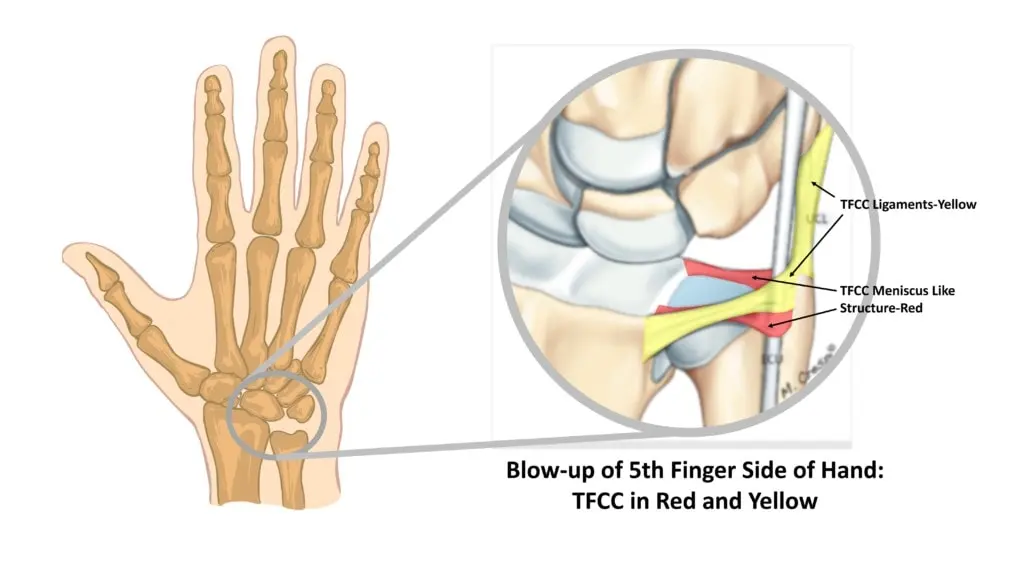
What is the TFCC and Why Does It Matter? 🧠
The Triangular Fibrocartilage Complex (TFCC) is a small but mighty structure on the ulnar (pinky) side of your wrist. It acts as a shock absorber and stabiliser for your wrist and forearm, particularly important when you rotate your forearm (like turning a doorknob) or bear weight through your hand (e.g., pushing up from a chair, loading a barbell, or doing a handstand).
It’s often called the “meniscus of the wrist”—but it gets far less attention until things go wrong.
In Fact, I’ve A TFCC Tear Myself And Rehabbed It Wrong (Initially) ❌
But you don’t have to go through the same mistakes that i did.
TFCC injuries can linger on for an extended period if poorly managed.
At Crux Physio & Hand Therapy, I will take a structured approach to help you manage your TFCC injury:
- 🧠 Education around movement patterns, joint sparing, and pain management
- 🦾 Progressive loading to build wrist stability and forearm strength
- 🌀 Proprioceptive retraining to restore fine control and confidence
- 🖐️ Splinting (when indicated) to unload tissue and allow healing
I will tailor your program to your goals—whether that’s climbing, working with tools, or playing with your kids.
5th Finger side of wrist pain, clicking, giving way or weakness with rotation? We’ll confirm if it’s the TFCC, calm it quickly, and map a return to work, lifting, or climbing—without unnecessary scans or downtime.
Now Consulting at Croydon Family Practice. Call (03) 9213 700.
Signs and Symptoms of a TFCC Injury 🔍
TFCC injuries are often misdiagnosed or overlooked because their symptoms can mimic other wrist conditions. Here’s what to watch out for:
- 🌪️ Aching or sharp pain on the ulnar side of the wrist
- 🧴 Discomfort when turning keys, opening jars, or doing push-ups
- 🫳 Loss of grip strength or sense of “weakness”
- 🎯 Clicking, catching, or a sense of instability during wrist rotation
Pain may be persistent or only triggered during specific movements—especially those involving rotation or ulnar deviation.
Most People Don’t Know: TFCC Injuries Are Often Missed ❗
One of the key challenges with TFCC injury is that it’s frequently underdiagnosed. Why?
- X-rays are often normal. Unless there’s a fracture or joint spacing issue, plain films miss soft tissue damage.
- MRI may not always detect subtle tears, especially if contrast isn’t used.
- Symptoms overlap with other ulnar-sided wrist issues like ECU tendinopathy or ulnar impaction syndrome.
That’s why seeing a clinician familiar with complex wrist anatomy—like a hand therapist or upper limb physio—is crucial. A standard wrist screen may not be enough.
What Causes TFCC Injury? ⚠️
TFCC injuries occur from either trauma or degenerative overload. The mechanism often influences how the injury presents and heals.
🚨 Traumatic Causes
- Falling on an outstretched hand
- Twisting the wrist under load
- Lifting something heavy while the forearm is rotated
🔁 Degenerative Causes
- Age-related thinning of cartilage
- Repetitive load or torsion at end range (common in manual workers, baristas, or climbers)
- Anatomical variation like positive ulnar variance (ulna longer than radius)
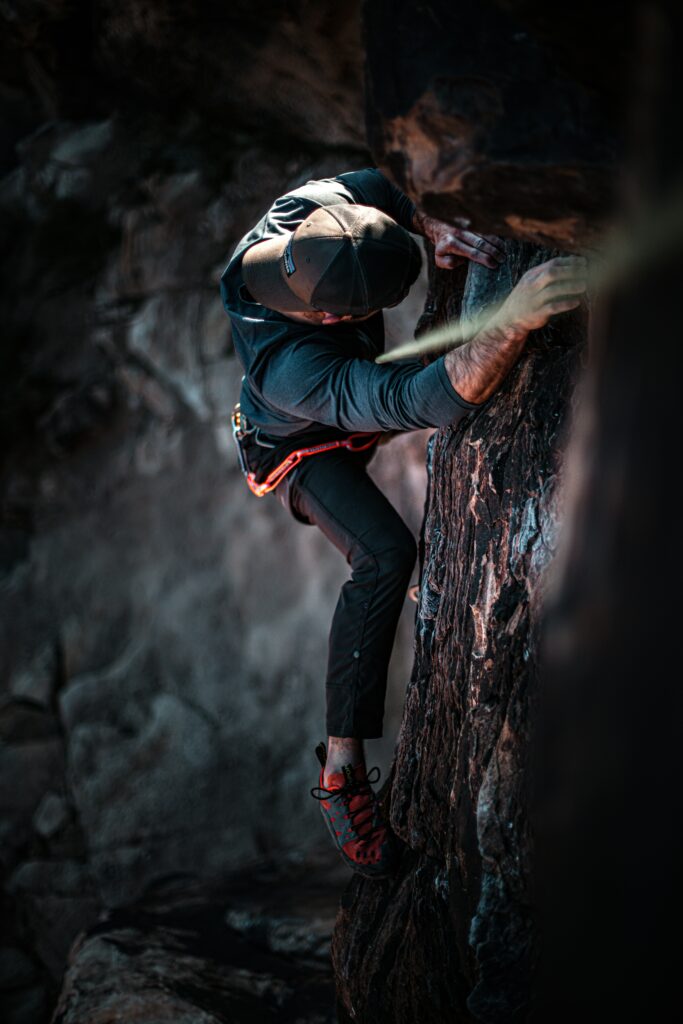
Climbers: It’s Not the Crimping 🧗♂️
Some climbers assume their wrist pain comes from crimping. But crimping primarily stresses the fingers and typically involves a neutral wrist position.
In reality, TFCC symptoms are more often aggravated by:
- 🧱 Slopers, where the wrist is in extension and ulnar deviation
- 🤸 Mantling, which involves axial loading in wrist extension
- 🧲 Underclings, which combine supination and tension across the TFCC
These positions challenge the stability of the wrist and place more stress on the ulnar structures, particularly if load exceeds what the tissue is adapted for.
Not All TFCC Tears Are Symptomatic — Here’s Why 🎯
You might be surprised to learn that some TFCC tears are completely asymptomatic—found incidentally on scans.
So when does a tear become a problem?
Symptoms typically emerge when there’s:
- 🔄 Loss of passive wrist or DRUJ stability
- 💥 Mechanical overload that exceeds what the wrist can handle
- ⚖️ Disruption in load-sharing, causing stress to concentrate in a small area
🧠 In short, people become symptomatic when:
- Their wrist hasn’t adapted to the load being placed on it
- They experience a sudden spike in load (e.g., new training, fall)
- Or there’s instability that their neuromuscular system can’t compensate for
This explains why a mild tear in one person might cause severe dysfunction, while another person with a larger tear might feel nothing at all.
Do You Always Need Surgery for TFCC Injury? ❌
Not at all.
In fact, most TFCC injuries respond well to conservative treatment—particularly when identified early.
At Crux Physio & Hand Therapy, we take a structured approach to help you avoid surgery:
- 🧠 Education around movement patterns, joint sparing, and pain management
- 🦾 Progressive loading to build wrist stability and forearm strength
- 🌀 Proprioceptive retraining to restore fine control and confidence
- 🖐️ Splinting (when indicated) to unload tissue and allow healing
We tailor your program to your goals—whether that’s climbing, working with tools, or playing with your kids.
When to Get It Checked: Red Flags 🚩
Seek help if you experience:
- Persistent ulnar-sided wrist pain lasting more than 3–4 weeks
- Clicking or “giving way” during forearm rotation
- Pain when weight-bearing through the hand
- Reduced function in sport or work activities
Don’t wait until you “can’t grip anything”—early intervention leads to better outcomes.
TFCC Injury Recovery Timeline ⏱️
| Type of Injury | Recovery Time (Non-Surgical) | Key Considerations |
|---|---|---|
| Irritation or minor sprain | 3–6 weeks | Load modification and movement re-education |
| Partial tear | 6–12 weeks | Often requires splinting and rehab |
| Degenerative changes | Ongoing management | Focus on capacity-building and control |
| Post-surgical repair | 12–16+ weeks | Specialist rehab essential |
Can You Return to Sport or Manual Work? 💪
Yes—but don’t skip steps.
Returning to load (whether in sport or on the job) requires more than pain resolution. We focus on restoring control and capacity in your wrist under realistic, goal-specific conditions.
Whether you’re a plumber using a spanner, a barista pulling espresso, or a climber working slopers, we tailor your rehab to your world.
Final Thoughts 👐
TFCC injuries are often misunderstood, misdiagnosed, and mistreated. But with targeted care and proper load management, you can absolutely recover—without surgery in many cases.
At Crux Physio & Hand Therapy in Croydon, we specialise in the assessment and rehab of complex wrist issues, including TFCC tears. We combine real-world experience with evidence-based strategies to help you get back to what you love—whether that’s climbing, lifting, or working with your hands.
FAQs
Do TFCC tears heal?
Peripheral tears can heal (better blood supply); central tears often don’t—though symptoms can still settle with debridement and smart rehab.
Will a brace weaken my wrist?
Short-term protection doesn’t cause weakness; lack of progressive loading does. We’ll guide the dosage.
How do I know if I need surgery?
Persistent pain/instability after a good rehab trial, mechanical catching, or confirmed foveal detachment. We’ll help you decide with clear criteria.
Do I need an MRI for TFCC? Not always. Diagnosis is clinical first; MRI (or MRA) is useful if symptoms persist or surgery is considered.
What’s the difference between TFCC tear and ulnar impaction? TFCC is the tissue; impaction is overload from a relatively long ulna. They often coexist and change management.
What is the fovea sign? Tenderness between the ulnar styloid and pisiform suggesting TFCC/ulnocarpal injury
Related guides:
ECU tendinopathy/subluxation, ulnar impaction, lunotriquetral ligament injury, De Quervain’s, trigger finger, climber pulley injuries, lumbrical strain.
Clinician’s Corner
- Palmer & Atzei classifications (central vs peripheral/foveal)
- Imaging pearls (3T MRI/MRA indications; CT for DRUJ incongruity)
- Surgical decision tree (debridement vs repair vs unloading)
- Post-op protocols (immobilisation positions, milestones)
- Red flags & referral thresholds
📞 Ready to Take Control of Your Wrist Pain?
Book a consult today with our experienced upper limb physio. Get clarity on your diagnosis and a treatment plan designed for your goals—not just generic advice.