
Got Numb Fingers or Elbow Discomfort? 🤔
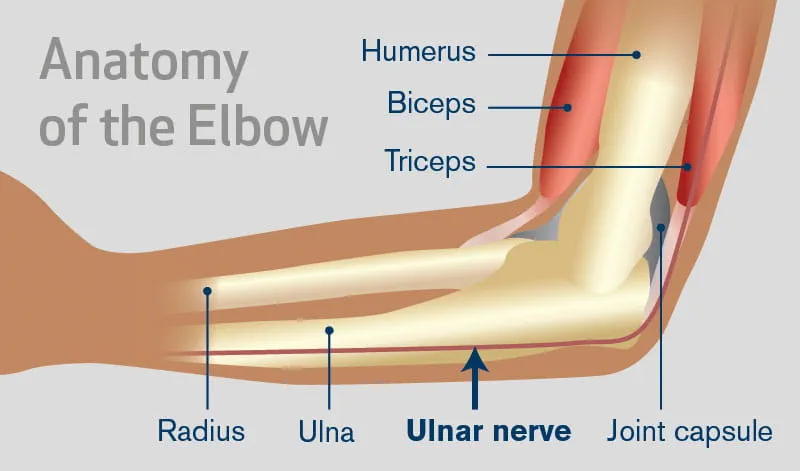
Most people don’t give much thought to their elbows—until something starts tingling. If you’ve ever noticed numbness, tingling, or weakness in your ring and little fingers, especially after leaning on your elbow or waking from sleep with a bent arm, Cubital Tunnel Syndrome (CuTS) might be the culprit.
But here’s the thing: Cubital Tunnel Syndrome is more than just “funny bone” irritation. Left unaddressed, it can impact your grip, fine motor control, and performance—particularly in climbers, desk workers, and manual labourers.
Let’s unpack what makes CuTS more complex than you might think—and how early, tailored treatment can help you move better, feel stronger, and stay in control.
🔍 What Is Cubital Tunnel Syndrome?
Cubital Tunnel Syndrome is a condition caused by compression or irritation of the ulnar nerve at the inside of the elbow. This nerve runs through a narrow passageway (the cubital tunnel) behind the medial epicondyle—right where you feel that sharp “zing” when you hit your funny bone.
When the nerve gets irritated or compressed, symptoms can include:
- Tingling or numbness in the ring and little fingers
- Hand clumsiness or grip weakness
- Pain or discomfort at the elbow
- Muscle wasting in prolonged or untreated cases
🪑 It’s Not Just the Elbow — Why Movement Variety Matters
While Cubital Tunnel Syndrome is most often aggravated by prolonged elbow flexion, it’s important to consider the broader context of how the ulnar nerve moves throughout the upper limb.
📌 Sustained positions—not just posture—can affect symptoms.
People often assume their posture is “causing” the problem, but there’s little evidence linking static posture directly to injury or nerve compression. Instead, a lack of movement, prolonged stillness, or repetitive positions—especially with the elbow bent or the shoulder forward—can contribute to nerve irritation.
The ulnar nerve isn’t isolated to the elbow. It passes through several regions, including:
- The thoracic outlet (near the shoulder)
- The cubital tunnel (at the elbow)
- Guyon’s canal (at the wrist)
If the nerve’s ability to glide and move is reduced—due to swelling, stiffness, or prolonged compression at multiple sites—it may contribute to symptoms.
That’s why treatment often includes encouraging movement variety, improving scapular control, and restoring normal nerve mobility—rather than simply “fixing” posture.
💡 Bonus Insight: Ulnar Nerve Instability Is Often Missed
One lesser-known cause of Cubital Tunnel symptoms is ulnar nerve instability—when the nerve snaps or “twangs” over the medial epicondyle during elbow movement.
This can feel like:
- Sharp or zapping pain during elbow motion
- A clicking or snapping sensation at the inner elbow
- Muscle fatigue or weakness in the hand
Unlike classic compression, this form of CuTS may not show up clearly on nerve conduction studies. It’s often diagnosed through dynamic ultrasound or careful physical examination.
🧗♂️ Real Case: The Climber With a Twanging Elbow
We once worked with a climber experiencing sharp elbow pain, numbness in the ring and little fingers, and grip weakness on crux moves. Initially, it seemed like standard CuTS. But on closer assessment, we discovered ulnar nerve instability—the nerve was snapping in and out of the cubital tunnel with elbow motion, causing repetitive microtrauma.
With a tailored bracing protocol, activity modification, and targeted finger and scapular strengthening, he made a full return to climbing. Today, he’s back on the wall—symptom-free and stronger than ever.
⚠️ What Happens If You Ignore It?
Many patients brush off the early signs of CuTS, assuming it’ll settle on its own. But without proper care, nerve irritation can persist or progress, potentially leading to:
- Ongoing numbness or tingling
- Muscle weakness in the hand
- Difficulty with fine motor tasks like typing or using tools
- A longer and more complex rehab process if left untreated
The goal of early treatment isn’t to alarm—it’s to prevent small issues from becoming big ones. Most people improve significantly with evidence-based conservative care, especially when started early.
🛠️ Why Early Treatment Matters
The good news? With early diagnosis and tailored rehab, most people improve without surgery.
Effective treatment often includes:
- Night splinting to reduce prolonged elbow flexion during sleep
- Activity modification (e.g., limiting time leaning on elbows)
- Nerve gliding exercises to restore mobility
- Postural and scapular retraining for better load distribution
- Bracing for ulnar nerve instability
- Surgical options for severe or persistent cases
Summary Table: Cubital Tunnel Syndrome
| Category | Details |
|---|---|
| Common Symptoms | – Numbness or tingling in ring & little fingers – Weak grip or hand clumsiness – Elbow discomfort |
| Key Aggravating Factors | – Prolonged elbow flexion – Sustained static positions – Repetitive upper limb loading |
| Less Common Causes | – Ulnar nerve instability – Multi-site nerve tension or gliding restriction |
| Treatment Options | – Night splinting – Activity modification – Nerve gliding – Scapular retraining – Bracing – Surgery if needed |
| Red Flags to Act On | – Persistent numbness at rest – Visible hand muscle wasting – Worsening weakness – No improvement after 8–12 weeks of rehab |
👋 Ready to Feel Better and Move Freely Again?
If Cubital Tunnel Syndrome is making everyday tasks harder—or keeping you from doing what you love—it’s time to take action with the right support.

At Crux Physio & Hand Therapy, we help people just like you overcome Cubital Tunnel Syndrome through personalised care that fits your lifestyle.
🧠 Expert diagnosis
🖐️ Custom splinting if needed
💪 Targeted rehab for strength, control, and confidence
Start your recovery today—and take the pressure off your hand and elbow for good.