
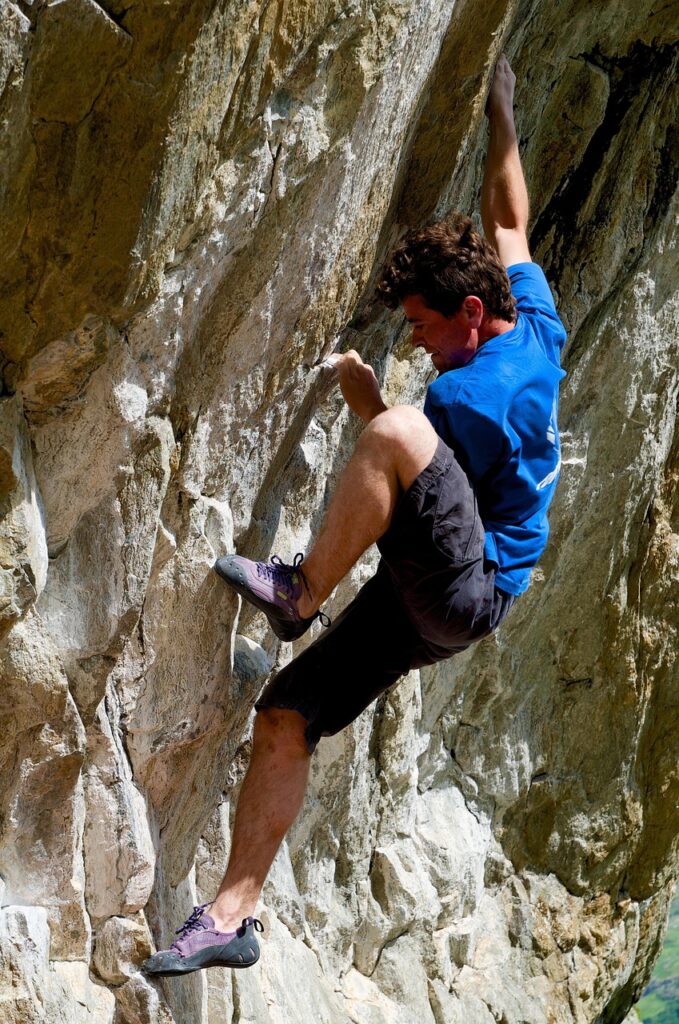
Finger Pulley Injury (A2/A3/A4): The Complete Guide for Climbers & Active Hands 🧗♀️🖐️
TL;DR ✨
- What it is: Strain or tear of the fibrous “pulley” bands (A1–A5) that hug your flexor tendons to the bone—most often A2, sometimes A3, and (yes!) A4 over the middle phalanx.
- How it happens: Hard crimping, dynamic catches, or pockets (👆 more A4) that spike load.
- Hallmarks: A sharp pop, pain and swelling, grip weakness; sometimes visible/ultrasound bowstringing.
- Good news: Most isolated injuries heal without surgery with smart off-loading, taping, and graded rehab.
- Return to climbing (typical ranges): Grade 1: 2–4 wks · Grade 2: 6–8 wks · Grade 3: 8–12+ wks · Grade 4/multi-pulley: 3–6 months (sometimes surgery).
- If pain lingers >8–12 weeks despite good rehab: consider the FLIP phenomenon (a small “flap” of torn pulley that keeps rubbing the tendon). See the section below. 🧩
What Are Finger Pulleys—and Why Do They Matter? 🧠
Your finger flexor tendons run like cables from the forearm to the fingertips. Annular pulleys (A1–A5) act like belt guides, keeping those cables close to the bone so you can generate force efficiently.
- A2: over the proximal phalanx—the workhorse; most commonly injured in closed crimp.
- A3: over the PIP joint—often tested by fast load spikes.
- A4: over the middle phalanx—key in pocket grips and positions with more DIP flexion.
When a pulley fails, the tendon can bowstring away from bone—painful, inefficient, and confidence-sapping on small edges and pockets.
How Do Pulley Injuries Happen? 🧗
- Full/closed crimp on tiny edges (A2/A3 risk).
- Pockets (mono/bi) and deep grips with DIP flexion (A4 risk).
- Gaston/undercling surges, coordination moves, dynos.
- Cold fingers, rushed warm-ups, or big jumps in hangboard intensity.
- Fatigue late in a session or the “one-more-try” attempt.
Symptoms & Red Flags 🚦
Typical symptoms
- Focal tenderness on the palmar side where the pulley lives
- A2: base of finger (proximal phalanx)
- A4: middle phalanx; often sore with resisted DIP flexion
- Swelling/bruising in 24–48 h
- Pain on resisted finger flexion or crimping; possible bowstringing with flexion
Red flags (seek urgent assessment)
- Finger looks crooked/unstable, or you cannot actively move it
- Numbness/colour change
- Multiple pulleys suspected, or pain across several structures
- High-energy mechanism + immediate loss of function
Grading (Climber-centric) 🎯
| Grade | What’s injured? | Key signs | Typical return (guide only) |
|---|---|---|---|
| 1 | Pulley strain (no tear) | Local soreness; no bowstringing | 2–4 weeks |
| 2 | Partial tear of A2/A3/A4 | Pain + weakness; minimal/none bowstringing | 6–8 weeks |
| 3 | Complete A2/A3/A4 | Often audible pop; bowstringing likely | 8–12+ weeks |
| 4 | Multiple pulleys and/or associated structures | Marked dysfunction | 3–6 months, consider surgery |
Ranges vary with training base, work demands, prior injury, and goals.
Do I Need Imaging? 🖥️
- A climbing-savvy clinical exam usually guides care.
- High-resolution ultrasound is excellent for pulley integrity and tendon-to-bone distance (bowstringing), including dynamic views while you move.
- MRI if diagnosis is unclear or you suspect multiple structures.
- X-ray only when an avulsion fracture is possible.
Stubborn symptoms after 8–12 weeks? This is where we look for FLIP with dynamic ultrasound (see below). 🔎
Immediate Care (First 72 Hours) 🧰
- Unload, don’t immobilise (unless severe): avoid painful gripping/crimping.
- Comfort: short-term ice/compression if helpful.
- Relative rest: let pain guide you (aim ≤3/10 with gentle movement).
- Support: light H-tape or a correctly sized pulley ring (never tight).
- Early motion: gentle active bends/straightens hourly to keep tendons gliding.
Resist the urge to “test” with max crimps—smart early choices save weeks. ✅
Your Rehab Roadmap (A2/A3/A4 Integrated) 📈
Phase 1 — Calm It Down, Keep It Moving (Days 3–14)
- Goal: Settle symptoms while maintaining glide.
- Do: Tendon glides (hook → straight → full fist → straight), light isometrics (soft putty/ball), extensor work (rubber band opens).
- Support: H-tape or ring; for A4, centre support over the middle phalanx.
- Avoid: Hard crimping; for A4, avoid pockets and big DIP flexion.
Phase 2 — Reload (Weeks 2–6)
- Goal: Reintroduce tensile load gradually.
- Edges: Large, comfy edges; half-crimp or relaxed open-hand.
- Strength: Eccentric–isometric finger flexor work; forearm capacity; ongoing extensor balance.
- A4 tweak: Keep DIP near neutral; no pockets yet.
- Rule: Pain ≤3/10 during; back to baseline next day.
Phase 3 — Return to Climbing (Weeks 6–12+)
- Progression:
- Jugs/rails →
- Friendly edges (vertical) →
- Smaller edges →
- Pockets last (shallow → deeper; two-finger before mono).
- Session guardrails: Short sessions, long rests, avoid back-to-back finger-intense days.
- Confidence aids: Tape/ring for the first 4–6 weeks back if helpful.
Phase 4 — Performance & Prevention (Ongoing)
- Specific strength: Controlled half-crimp progressions; two-arm → one-arm only when ready.
- Capacity: Repeaters at conservative intensities; build total time-under-tension first.
- Technique: Use body position and feet to offload fingers; open-hand more often.
- Programming: Finger-intense training ≤2×/week, spaced 48–72 h apart.
- Down-week: Every 4–6 weeks to consolidate.
Spotlight on A4 Pulley (Pocket-Specific Advice) 🔦
- Pain hotspot: palmar middle phalanx; worse with resisted DIP flexion.
- Grip triage: Skip monos/bis early; re-introduce last with shallow depth, vertical terrain, good feet.
- Taping: H-tape bridge or ring placed over the middle phalanx (snug, not constrictive).
- Progression cues: Add pocket volume → depth → intensity, in that order.
- Readiness check: You can complete rehab hangs and an easy/mod session with no next-day flare—and you trust the finger—before pockets return.
FLIP Phenomenon (Flap Irritation): Why Pain Sometimes Lingers After a Pulley Tear 🧩
Sometimes, when a pulley tears, a tiny loose flap of the torn pulley tucks under the tendon. Each time you bend/straighten, that flap rubs the tendon and its sheath, keeping it irritated. This is called FLIP—Flap Irritation Phenomenon.
How it feels:
- Ongoing sheath-type pain and swelling at the old injury site (often with a “full” feeling).
- Catching, grittiness, or creaking as the finger moves.
- You improve with rest, but pain returns quickly when you load edges again (and especially with pockets if the issue is near A4).
- It’s been 8–12+ weeks since the tear and sensible rehab, yet the finger still won’t settle.
Why it matters: most pulley injuries calm down with tape + graded loading. But if a pulley flap is physically rubbing the tendon, the problem becomes mechanical, not just inflammatory—so more rest alone usually won’t solve it.
How we check for it:
- Start with a good clinical exam to confirm it’s sheath pain, not a new tear.
- Order a high-resolution, dynamic ultrasound: the sonographer watches the tendon glide while you flex/extend and looks for a pulley stump/flap moving under the tendon, and measures tendon-to-bone distance.
- MRI only if the picture remains unclear.
Where it fits in grading: some modern write-ups treat single-pulley rupture + FLIP as a more complex pattern because it can be therapy-resistant until the flap is addressed (not necessarily a worse long-term outlook.)
What to do (step-by-step):
- 0–8 weeks after the tear: stick with high-quality conservative care—off-load, tape/ring for confidence, tendon glides, balanced loading, gradual return. 👍
- 8–12+ weeks and still stuck: organise a dynamic ultrasound to rule in/out FLIP. If a flap is seen and symptoms match, seek a hand surgery opinion. In small case series, tidying/removing the flap relieved the persistent tenosynovitis.
- Rehab after a FLIP diagnosis (with or without surgery): keep it graded and boring—open-hand/half-crimp first, delay pockets (A4), build time-under-tension before intensity, keep pain ≤3/10 and back to baseline by next day. 🗓️
Taping & Rings: What Actually Helps? 🩹
- H-tape and circumferential wraps can reduce symptoms and improve proprioception.
- Pulley protection rings may reduce tendon excursion (often reassuring for A4); fit matters.
- Use them as aids, not cures—progressive loading is the long-term fix.
- Never tape tight enough to cause tingling, colour change, or swelling beyond the tape. 🚫
When Is Surgery Considered? 🏥
- Multiple pulleys disrupted (e.g., A2 + A4), marked bowstringing, collateral/volar plate involvement.
- Failure of well-run conservative rehab with persistent functional limits.
- High-level athletes with clear structural deficits and stalled progress.
Most isolated A2/A3/A4 injuries recover without surgery.
Common Mistakes That Prolong Recovery 🧱
- “Testing” with hard crimps in week 1–2
- Skipping extensor balance work
- Rushing back to steep boards and pockets (A4!)
- Progressing two variables at once (intensity + volume + edge size)
- Ignoring sleep, nutrition, and overall load management
Warm-up & Prevention That Actually Works 🔥
- 10–15 min progressive warm-up: easy traverses, jugs, forearm pumps, tendon glides
- Rule of 3s: 3 bigger edges → 3 sets → 3 easy climbs before touching small holds
- Bias open-hand/half-crimp; keep full crimp for when it’s truly needed
- During rebuild, plan 2 capacity sessions for every 1 intensity session
- Schedule a down-week every 4–6 weeks
FAQ 💬
Can I keep climbing with a pulley injury?
Yes—with a plan. Early on, stick to jugs and technique drills, keep pain ≤3/10, avoid hard crimps; for A4, avoid pockets until later.
Is taping enough?
Helpful, but not sufficient. Graded loading is the engine of long-term recovery.
How long will it take?
Grade 1: 2–4 wks; Grade 2: 6–8 wks; Grade 3: 8–12+ wks; Grade 4/multi-pulley: 3–6 months (sometimes surgery).
Open-hand or crimp for A4?
For A4, grips with more DIP flexion (pockets) tend to stress it. Keep DIP near neutral early; re-add pockets later.
What is the FLIP phenomenon?
A small flap of torn pulley can tuck under the tendon and rub the sheath, keeping it irritated. We look for it with dynamic ultrasound, and if present we adjust rehab or—occasionally—discuss a small procedure to remove the flap.
For Melbourne Climbers & Active Hands: Get Personalised Help 🤝
Want an assessment that matches your grip style (slab vs steep, crimps vs pockets) and your timeline? Let’s build a plan together.
- Call/SMS: (03) 9213 7000
- To book online click here.