
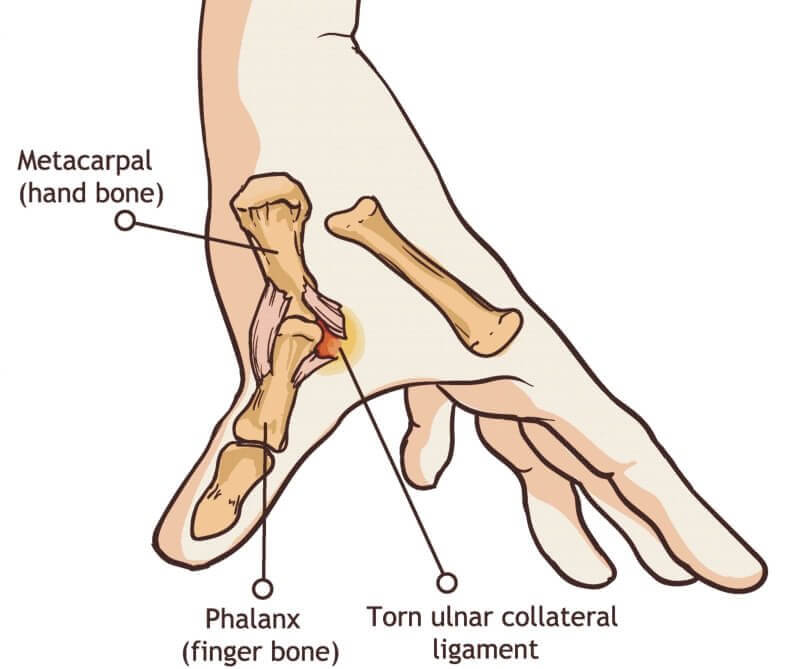
The ulnar collateral ligament (UCL) is a small but critical ligament on the inside of your thumb’s metacarpophalangeal (MCP) joint. It stabilises the thumb during grip, pinch, and precision movements. When this ligament is torn—commonly through trauma such as falling, sports contact, or even car accidents—the injury is known as Skier’s Thumb (acute) or Gamekeeper’s Thumb (chronic/degenerative).
Often dismissed as a simple sprain, a UCL injury—if left untreated or improperly managed—can result in permanent instability, chronic weakness, and even arthritis.
🧠 What Most People Don’t Realise About UCL Injuries
- You don’t need to be skiing. The name is misleading—only a small percentage of injuries actually occur while skiing. UCL injuries more often happen in:
- Falls onto an outstretched thumb
- Contact sports (e.g. AFL, rugby, martial arts)
- Motor vehicle accidents, where the thumb is forcefully abducted against the steering wheel
- Workplace trauma or power tool incidents
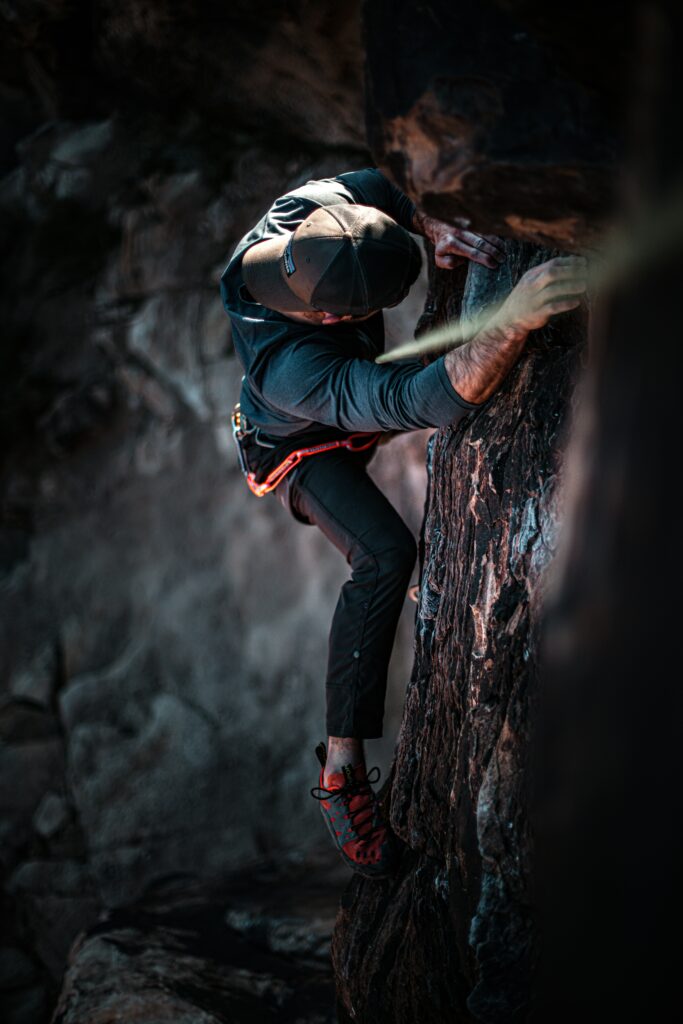
- Climbers and gymnasts during high-stress thumb loading
- You can still move your thumb—even with a complete tear. This gives a false sense of security. Patients often delay treatment thinking it’s just a sprain.
- Chemist splints often don’t cut it. Over-the-counter braces rarely provide the correct immobilisation, and poor fit can compromise healing. Proper immobilisation requires a custom thumb spica splint.
⚠️ The Stener Lesion: A Commonly Missed Complication
One of the most critical reasons to properly assess a UCL injury is the risk of a Stener lesion—a complication where the torn ligament becomes displaced and caught above the adductor aponeurosis. This creates a physical barrier that prevents the ligament from healing naturally, even with immobilisation.
A Stener lesion occurs in over 80% of complete UCL ruptures. Missing this can result in poor outcomes despite seemingly appropriate care.
🔍 How to Identify a Stener Lesion
| Finding | Clinical Implication |
|---|---|
| Ulnar-sided thumb lump | Suggests retracted UCL stuck above adductor aponeurosis |
| Persistent instability | May indicate non-healing due to displaced ligament |
| Snap at time of injury | Highly suggestive of complete ligament rupture |
Early imaging (ultrasound or MRI) is often required to confirm a Stener lesion. If confirmed, surgical repair is needed to restore joint stability.
⏳ What Happens If You Don’t Treat It?
Delayed or improper management can lead to:
- Chronic MCP joint instability
- Loss of pinch strength and grip
- Difficulty with everyday tasks like turning keys, holding tools, or lifting
- Progressive joint degeneration and arthritis
These consequences are especially problematic for tradies, athletes, climbers, musicians, and anyone working with their hands.
✋ Why Choose a Hand Therapist?
While general physiotherapists are trained in managing a wide range of injuries, hand therapists bring specialised knowledge and tools that are essential when dealing with ligament injuries of the thumb.
Benefits of Hand Therapy for UCL Injuries:
- Accurate diagnosis of partial vs complete tears and early recognition of complications like Stener lesions
- Custom-moulded thermoplastic splints to protect the thumb without over-restricting function
- Progressive, thumb-specific rehabilitation focusing on stability, strength, and functional grip
- Close collaboration with hand surgeons if surgical intervention is required
Hand therapists don’t replace general physios—they complement them by focusing on the intricate biomechanics of the hand, where early nuance can make or break long-term recovery.
🛠️ Real Case: Steering Wheel Trauma
A 36-year-old male presented with persistent thumb weakness after a car accident. At the time, he was gripping the steering wheel tightly during impact. The force forced his thumb into abduction. X-ray was clear, and he was given a generic brace. Six weeks later, he still couldn’t pinch or write comfortably. On review by a hand therapist, a suspected Stener lesion was confirmed via ultrasound. Surgical repair and guided rehab restored full function—but delayed care extended recovery by months.
✅ Summary of Treatment Pathways
| Injury Grade | Management |
|---|---|
| Grade 1–2 (partial) | Immobilise in custom thumb spica splint for 4–6 weeks |
| Grade 3 (complete) | Surgical repair—especially if >15° instability or Stener lesion |
| Post-op rehab | Hand therapy to restore strength, control, and joint stability |
📞 Don’t Ignore Your Thumb Pain—Get It Checked Early
Still feeling thumb pain, weakness, or instability after a fall or accident?
Early assessment can make the difference between a full recovery and chronic dysfunction.
👉 Book a consultation with our hand therapy team today to:
- Get a proper diagnosis
- Receive a custom splint (not a one-size-fits-none)
- Avoid long-term complications like instability or arthritis
🖐️ We offer urgent same-day appointments for acute hand injuries.